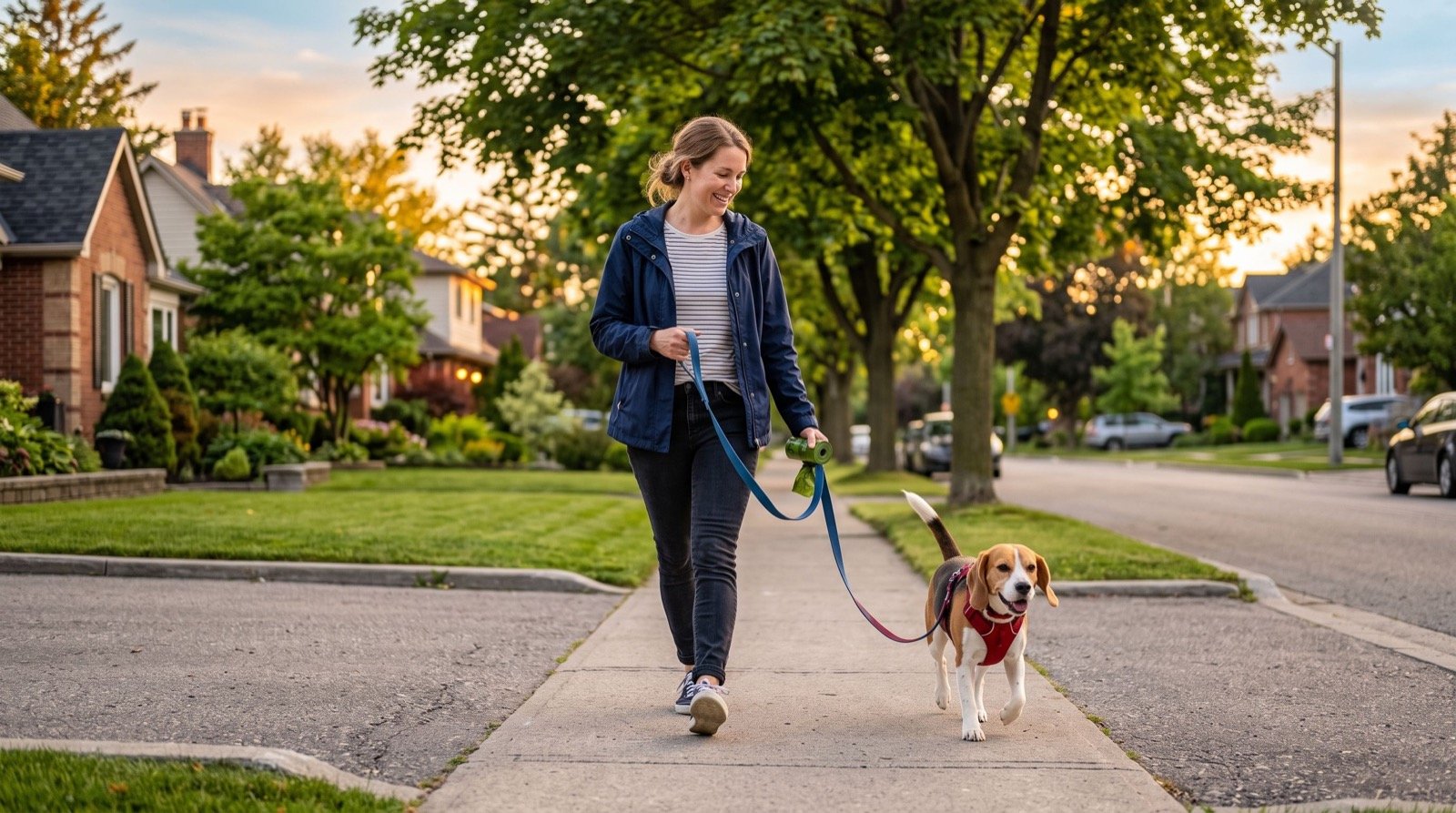
You water faithfully, you fertilize on schedule, and still your lawn looks like it lost an argument with a flamethrower — scattered brown circles, some with suspiciously lush green halos around them. If a dog lives at your address, you already suspect the culprit. The condition even has a name among turf professionals: dog spot disease. The encouraging news is that it is one of the most fixable lawn problems there is, once you understand what is actually happening down at the root level. Here is the full diagnosis-and-repair manual.
Diagnosing the Damage: Urine, Waste, or Something Else?
Not every brown patch is the dog’s fault, so start with a two-minute test. Grab a dead spot’s grass and tug. If it lifts like a loose carpet, you likely have grubs, not a dog problem. If it holds firm and the patch is roughly circular with a darker green ring at the edge, that is classic urine scald: the nitrogen concentration kills grass at the center but fertilizes the dilution zone around it. Irregular smothered patches, often with yellowed flattened grass, mark spots where solid waste sat too long. Each cause gets a different fix, which is why guessing wastes a season.
Why Urine Burns Grass
Dog urine is not acid and it is not poison — it is fertilizer at an overdose. Urea delivers a nitrogen spike that overwhelms the soil in one spot, chemically identical to spilling a pile of lawn fertilizer in one place. That is why the myths fail: tomato juice, special treats, and pH supplements do not change the physics of concentration. Female dogs and large dogs get blamed more only because they tend to empty the bladder in one spot instead of marking in small amounts across a walk. The variable that matters is volume per square inch, not gender, breed, or diet fads.
The Repair Protocol for Urine Spots
- Flush the spot. Within a day or two of noticing damage, soak the area deeply to dilute and push the nitrogen down past the root zone. Fresh spots caught within hours can often be saved by water alone.
- Rake out the dead material. If the center is fully brown, the crowns are dead and will not regrow. Remove the thatch to expose soil.
- Rough up and top-dress. Scratch the surface, add a half-inch of compost or clean topsoil to buffer what nitrogen remains.
- Reseed with a tolerant variety. Perennial ryegrass and tall fescue shrug off urine far better than Kentucky bluegrass. Overseeding your whole lawn toward these varieties is the long-term armor.
- Keep it damp for fourteen days. Light, frequent watering until germination, then taper to normal.
The Repair Protocol for Waste Spots
Solid waste kills differently — it smothers and scalds slowly, and it leaves pathogens behind in the soil. Remove deposits promptly and the grass usually recovers on its own within weeks. The households that struggle here are almost always the ones where pickup happens “eventually,” and the answer is boring but proven: make removal a scheduled service, whether that service is you every Saturday or a professional route. The rise of every local Pooper scooper company in the past decade tells you how many homeowners decided the weekly visit was worth it — for the lawn and for the weekend hours back.
Prevention: Redirect, Dilute, Fortify
Repair without prevention is a subscription to repair. Three strategies, in order of effectiveness:
- Redirect. Train the dog to a designated potty area surfaced with mulch, pea gravel, or tough turf. Two weeks of leash-walking to the spot after meals establishes the habit for years. This single change ends urine scatter across the showcase lawn.
- Dilute. If redirection is not practical, keep a watering can by the door and chase the morning’s first urination — the most concentrated of the day — with a gallon of water. It feels ridiculous for about a week, and then it just becomes how you save a lawn.
- Fortify. Raise your mowing height to three inches or more, water deeply and infrequently to drive roots down, and ease off nitrogen fertilizer in the dog’s zones, since the dog is already supplying plenty.
The Tools That Make Prevention Stick
Every prevention plan above lives or dies on friction. If cleanup means bending, bagging by hand, and washing something afterward, it slides to the weekend, then to next weekend. A long-handled Pooper scooper parked in a bucket by the back door converts the chore into a ninety-second standing task, which is the difference between a routine that survives and one that becomes another abandoned resolution. The same is true of the watering can and the designated-area treats: stage the gear where the behavior happens, and the behavior happens.
Do the Supplements and “Dog Rocks” Actually Work?
Pet stores stock an entire shelf of products promising to neutralize urine before it leaves the dog — rocks for the water bowl, chewable tablets, powders for the food. Approach the whole shelf skeptically. Independent testing has found minimal effect from water-bowl rocks, and veterinary nutritionists warn that anything acidifying or alkalizing your dog’s urine enough to change lawn chemistry is also changing conditions inside the urinary tract, where pH manipulation can encourage crystal and stone formation. That is a real medical risk taken to solve a cosmetic problem that water and grass selection solve safely. The only ingestible fix with vet support is the simplest: encourage more water intake, which dilutes nitrogen naturally. A splash of low-sodium broth in the bowl accomplishes more than any boutique supplement, at a fraction of the cost and none of the risk.
When to Call In Reinforcements
If more than a third of the lawn is damaged, or the same zones fail season after season despite the protocol, the problem may extend past the dog — compacted soil, poor drainage, or a grass variety fundamentally wrong for your region and traffic. That is the point where a soil test and a conversation with a local turf pro pay for themselves, the same way homeowners lean on dependable specialists whenever a project outgrows the weekend-warrior toolkit. A one-time renovation with the right seed blend beats five years of patching the wrong grass.
A Realistic Timeline
Expect visible recovery in three to four weeks for reseeded urine spots and faster for waste-smothered areas. By the second season of redirect-dilute-fortify, most owners report the problem has shrunk from “the whole backyard” to “an occasional spot after a rainy week.” A green lawn and a happy dog were never actually in conflict — they were just waiting for the owner to referee the chemistry between them.